Team WIGTN at ACL 2026 San Diego and IWSLT 2026: a trip report
Six days in San Diego: a live demo booth at ACL System Demonstrations, an invited talk and poster at IWSLT, a reception on an aircraft carrier, and the deployment questions that changed what we build next.
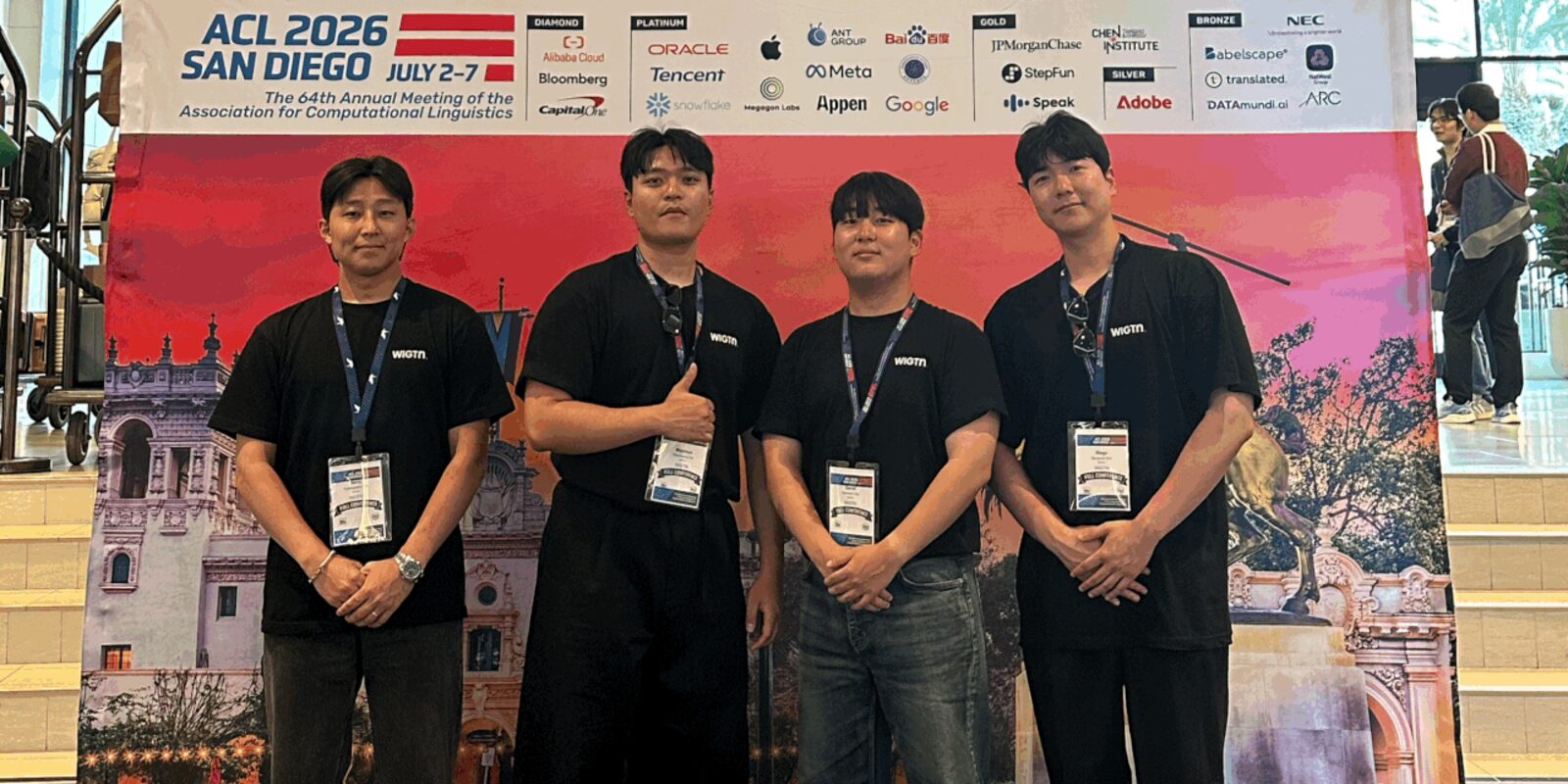
San Diego, July 2026. The acceptance email arrived back in April; the part that mattered came three months later, when WIGVO went to the ACL 2026 System Demonstrations floor as booth D3. Not a poster in a hallway. A working phone line, running all day, for three days. Alongside it we were invited to IWSLT 2026, the spoken-language-translation workshop, for an oral talk and a poster.
This is what we brought, what happened, and what we are changing because of it.
Arriving
The 64th Annual Meeting of the Association for Computational Linguistics, July 2–7. You get a sense of the scale before you are through the door: the whole frontage of the convention centre carries the banner, and the registration queue behind it does not stop moving for two days.
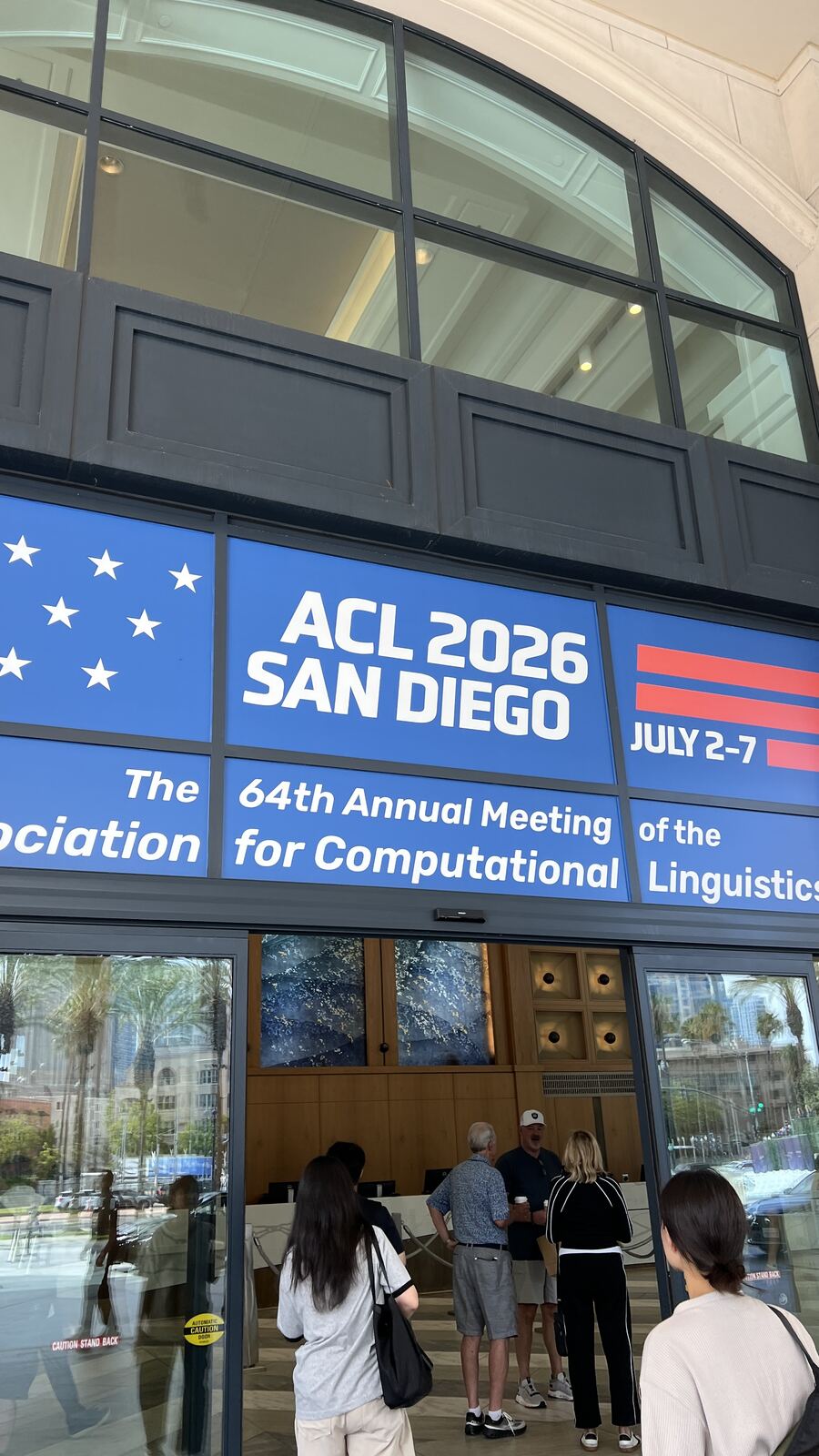
July 2. Through the front door and into the queue.
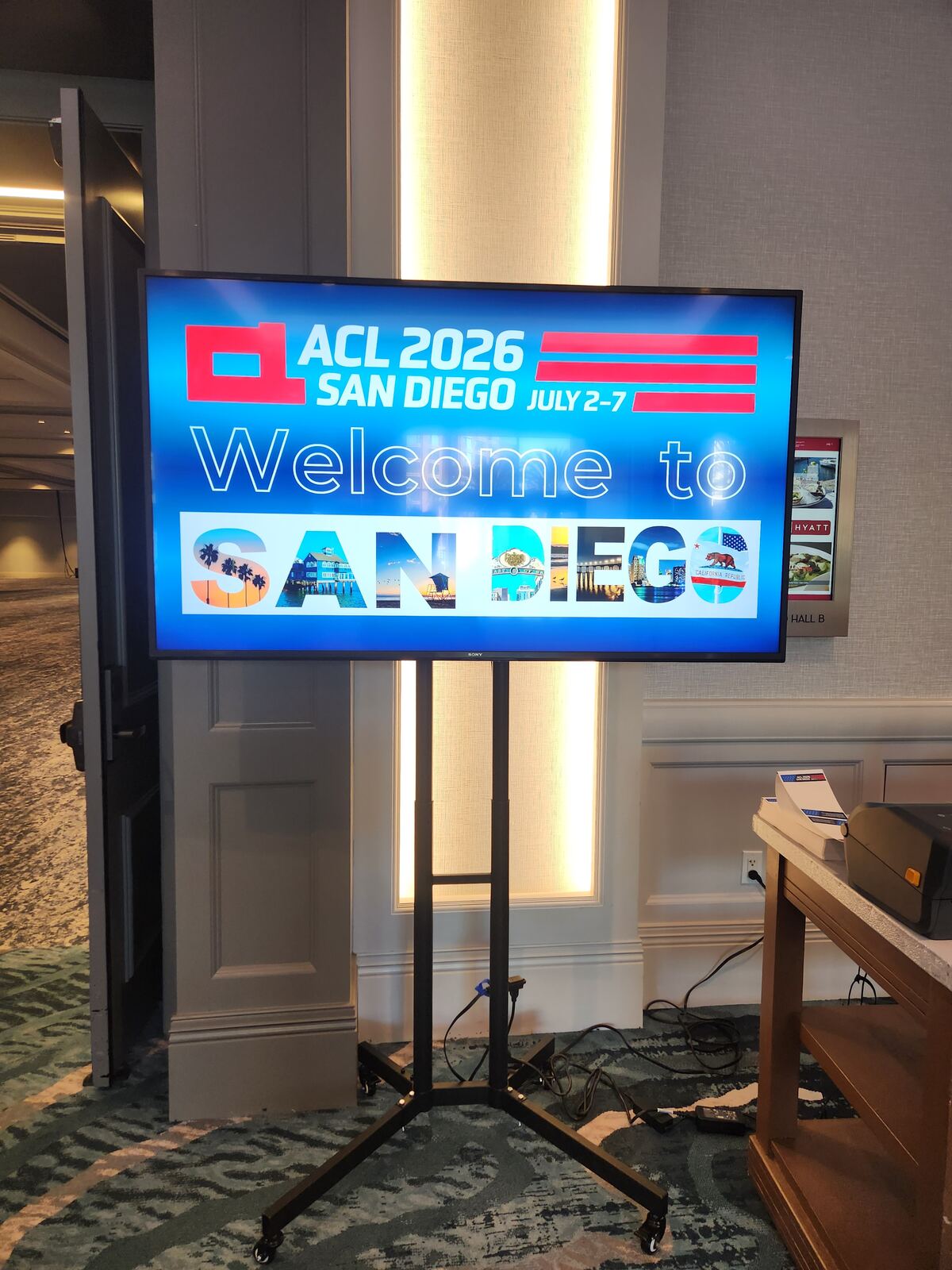
The first thing the building says to you.
The workshop days
The first two days are workshops and tutorials, and they are the part of ACL that does not make it into anyone's paper. You sit in a room with sixty people watching a method you have never seen, in a subfield you do not work in, and you leave with three ideas you were not looking for. It is also where you learn what everyone else is worried about this year.
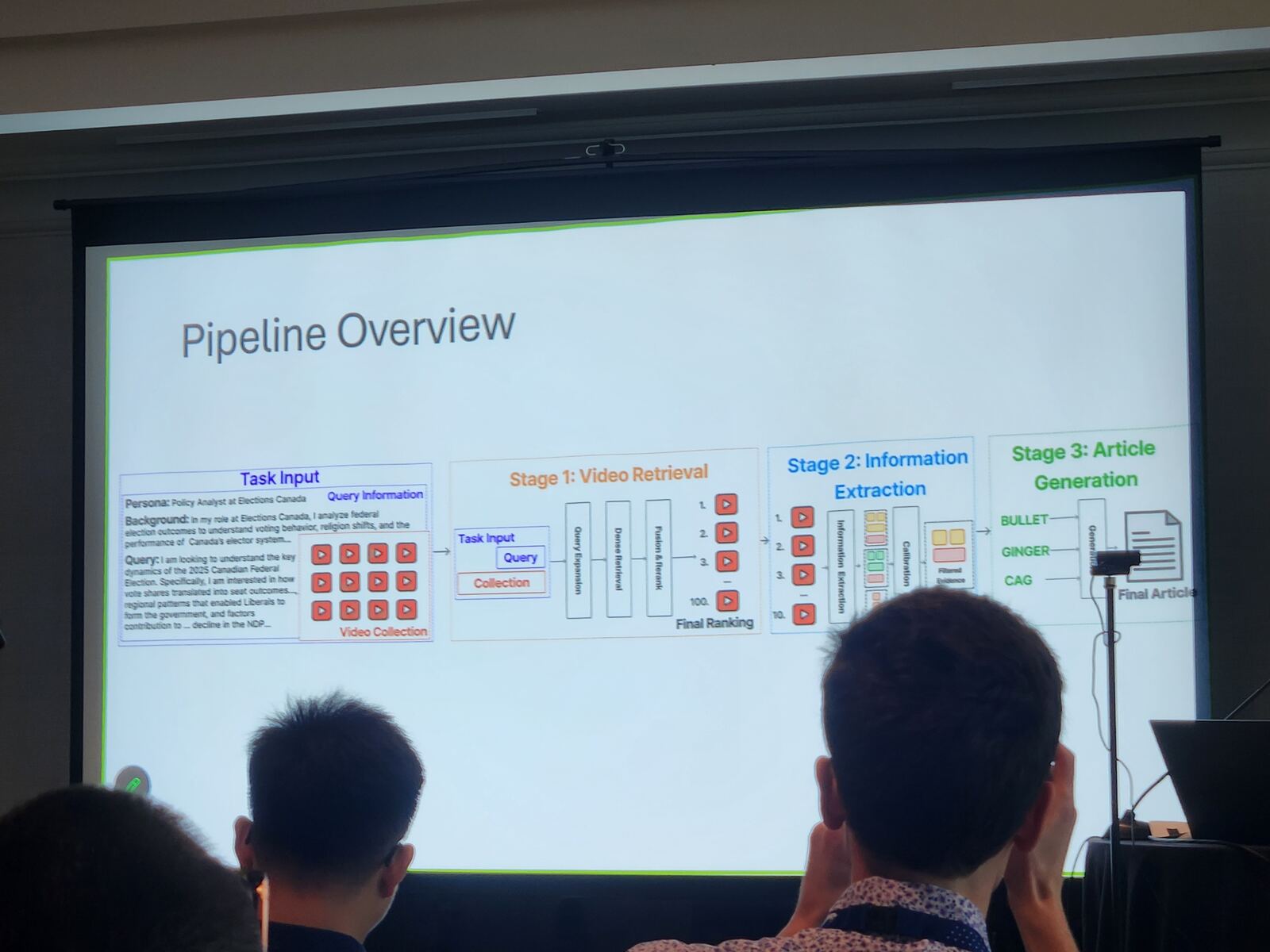
Workshop day. Someone else's pipeline, and a room taking notes.
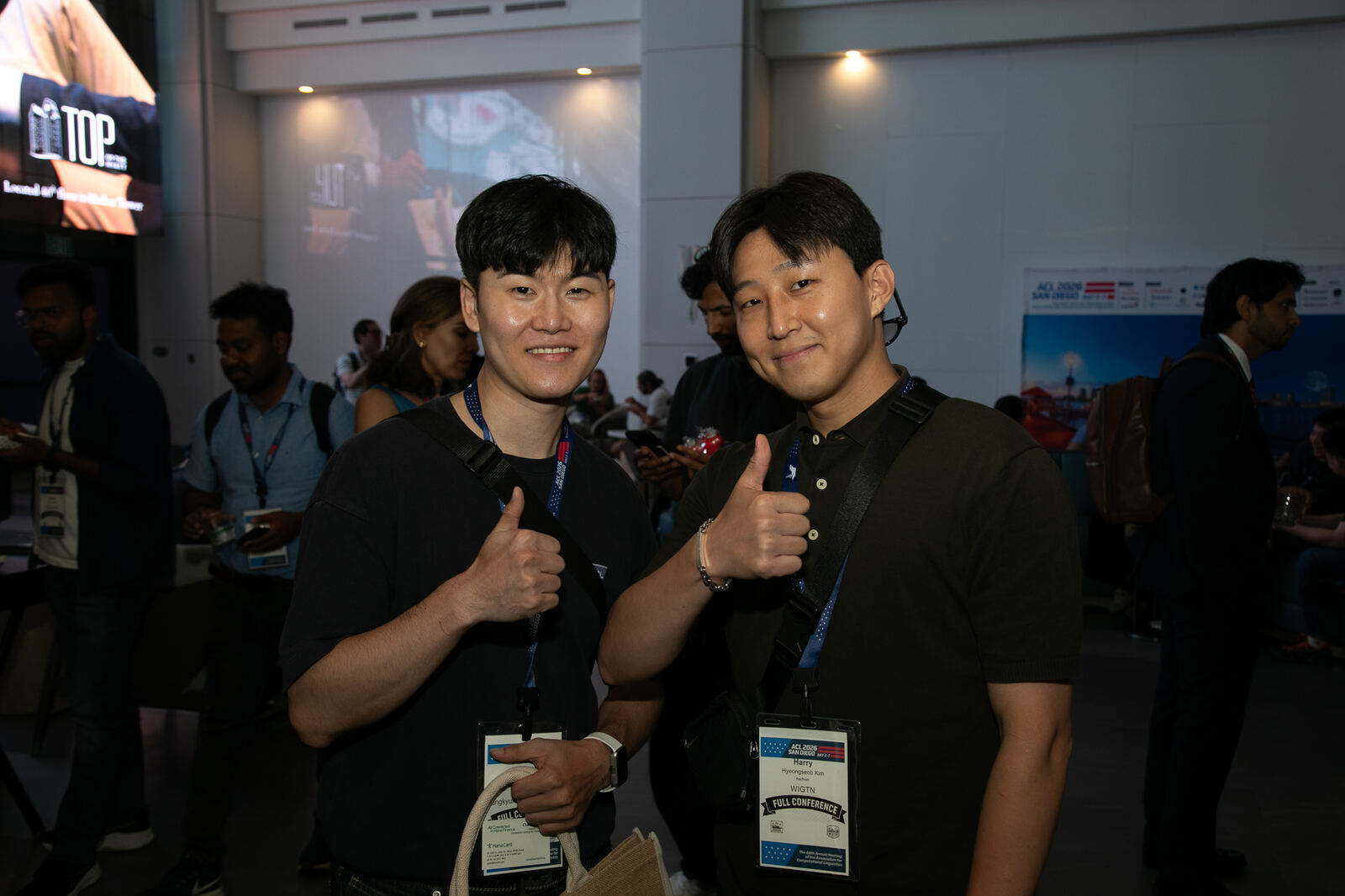
Caught by the conference photographer between sessions.
What we brought
WIGVO translates a phone call in both directions, in real time, over the ordinary telephone network. The constraint that shapes everything: the person on the other end installs nothing. No app, no headset, no setup. They pick up a phone the way they always have.
That constraint is the whole point. The places that need translation most, the hospital front desk, the city office, the bank call center, are still running on landlines. But a phone line is a hostile environment for speech: narrowband 8 kHz audio, codec distortion, variable delay, and no way to run echo cancellation on the recipient's device. Translated speech played into the line can come back, get recognized again, and trigger a loop that translates itself. In our ungated prototype, eight of ten test calls looped until we cut them off manually.
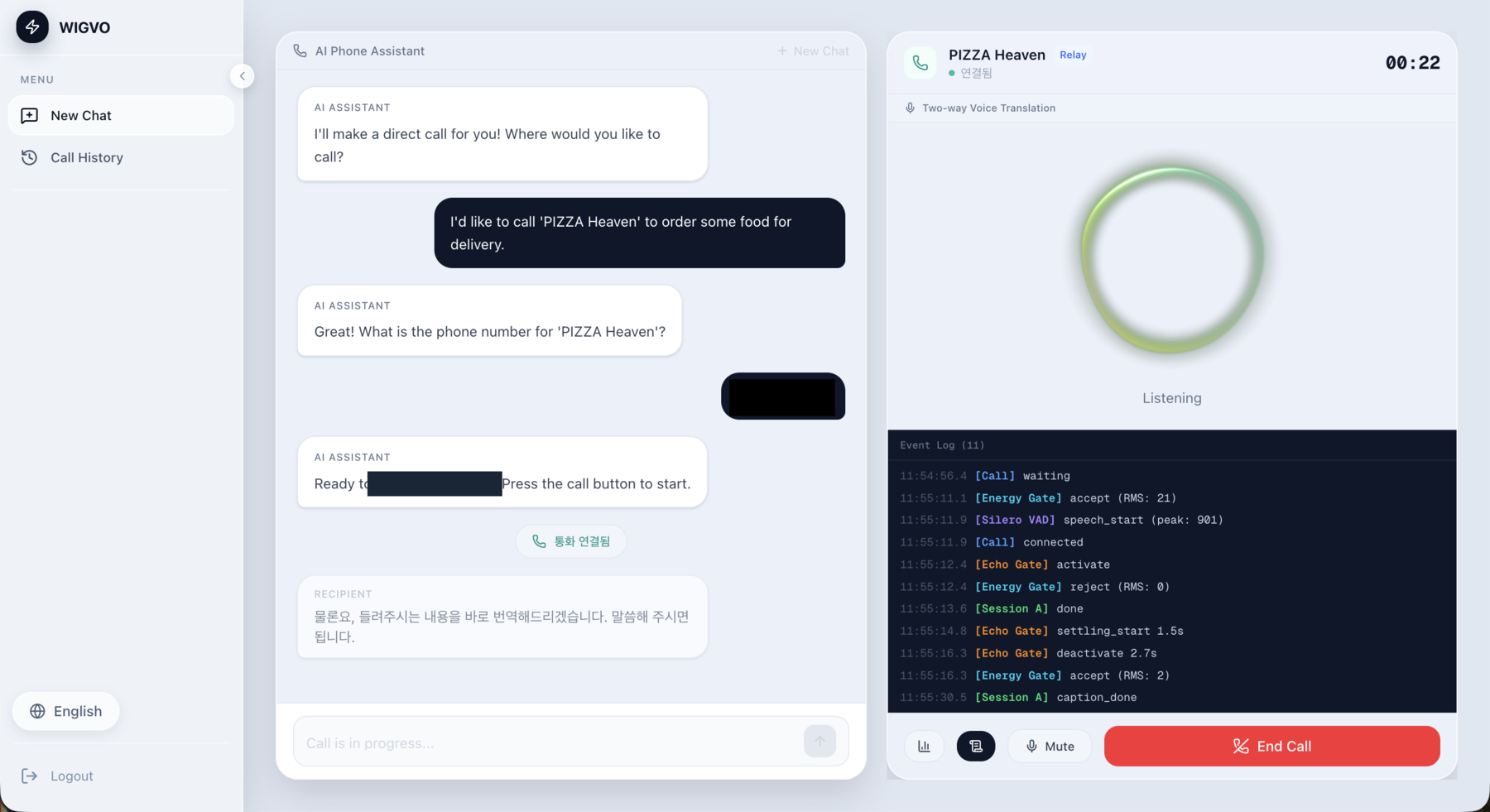
The numbers we took to San Diego: 555 ms median latency from caller to callee, zero echo-induced loops across 147 completed field calls, and USD 0.28 per minute on the evaluated provider stack. Those come from 155 real calls over a live phone network, not a simulation.
Three days at booth D3
The System Demonstrations track is not a poster session with a poster. You get monitors, and you are expected to run the thing. Ours showed one live call from both ends at once: the caller's side, the transcript, and the recipient's phone. We stood next to it and explained what the gates were doing as they did it.
Most demos ask you to watch. Ours asked you to talk. Visitors dialed a number, someone answered an ordinary phone, and the two of them held a conversation across a language barrier. Then they usually tried to break it: talking over each other, switching languages mid-sentence, walking away from the handset.
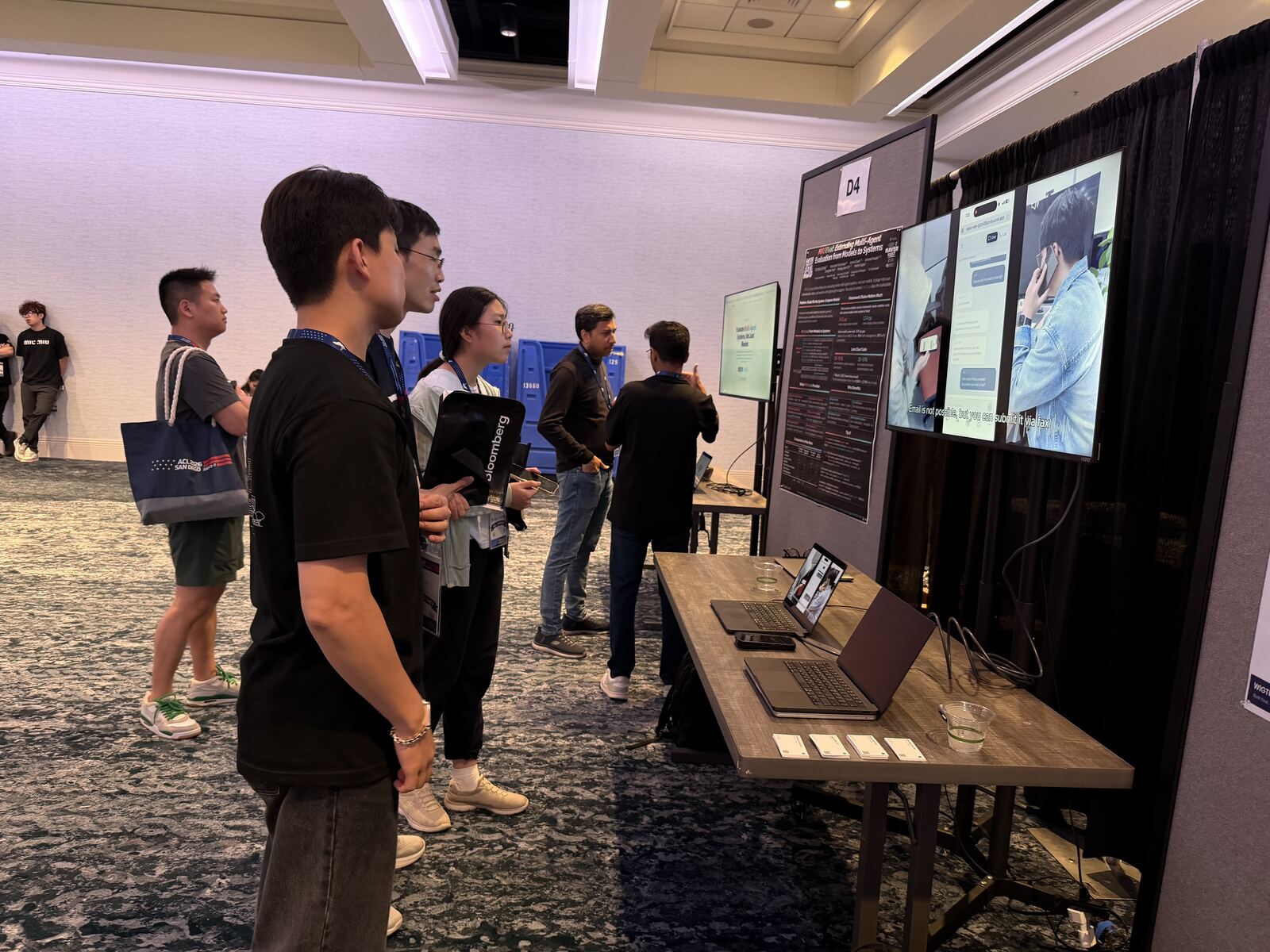
The screens did the explaining; we filled in the parts they could not show.
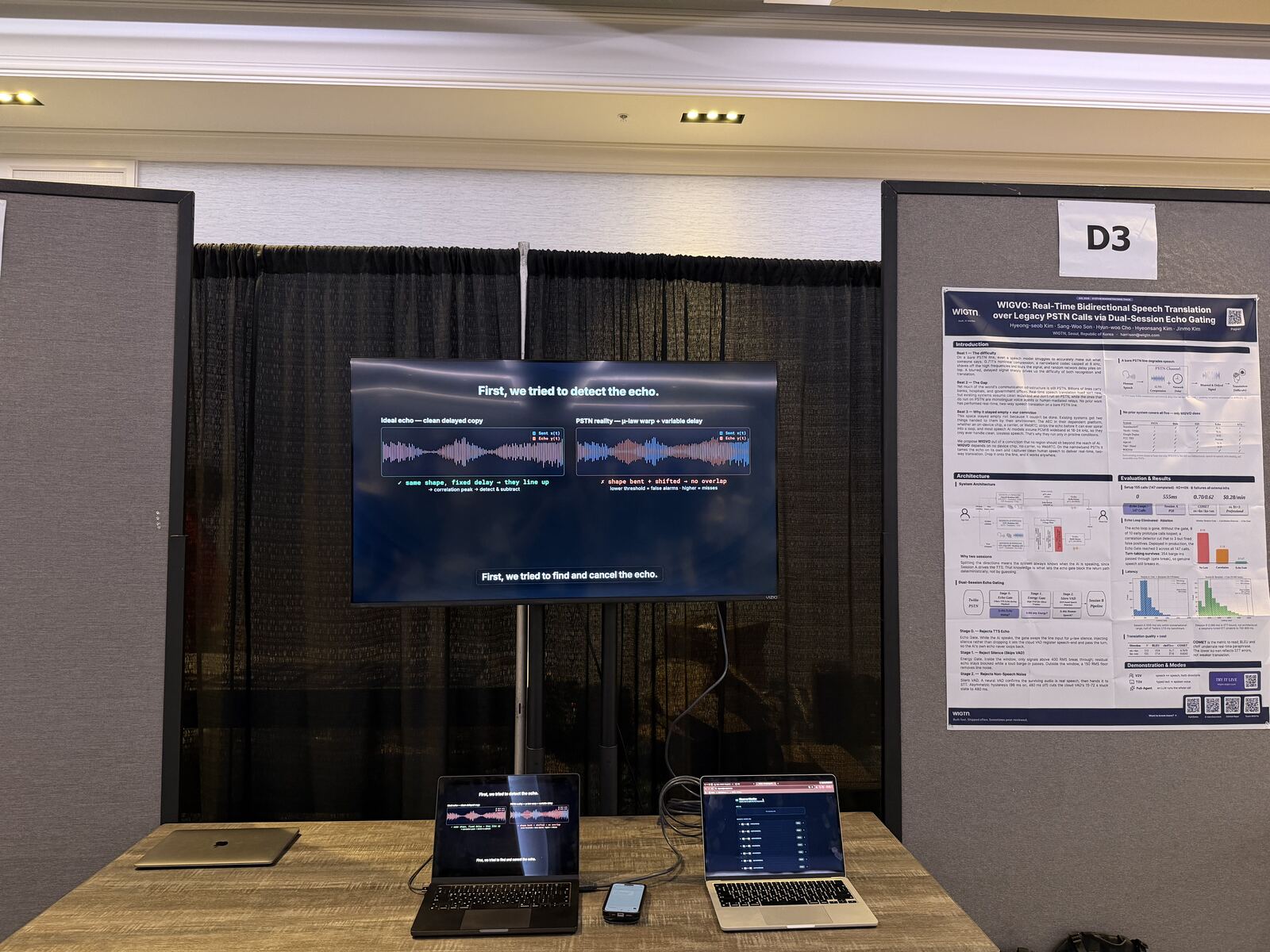
Most questions started with "wait, there is no app on the other end?"
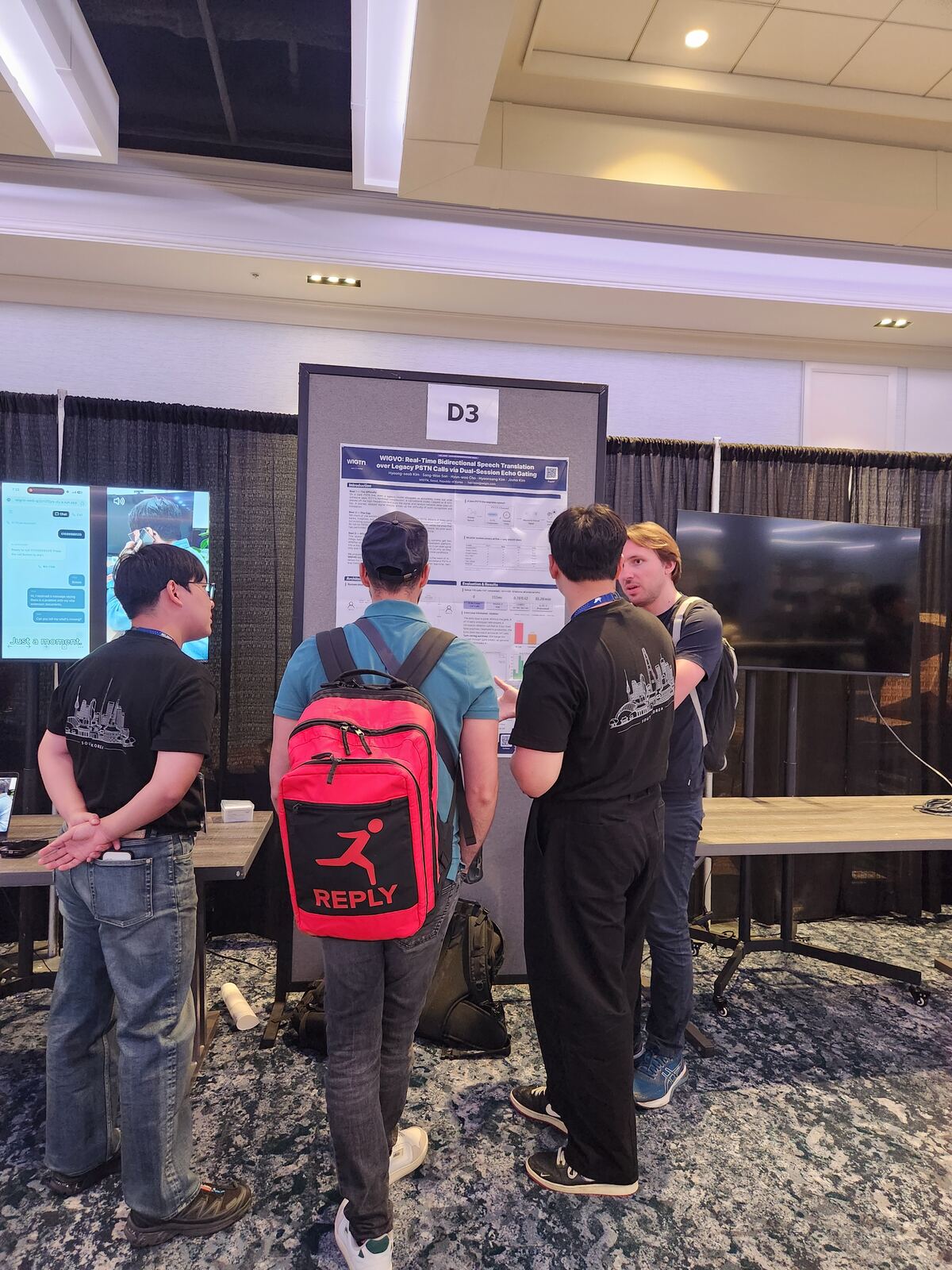
Booth D3, set up and running.
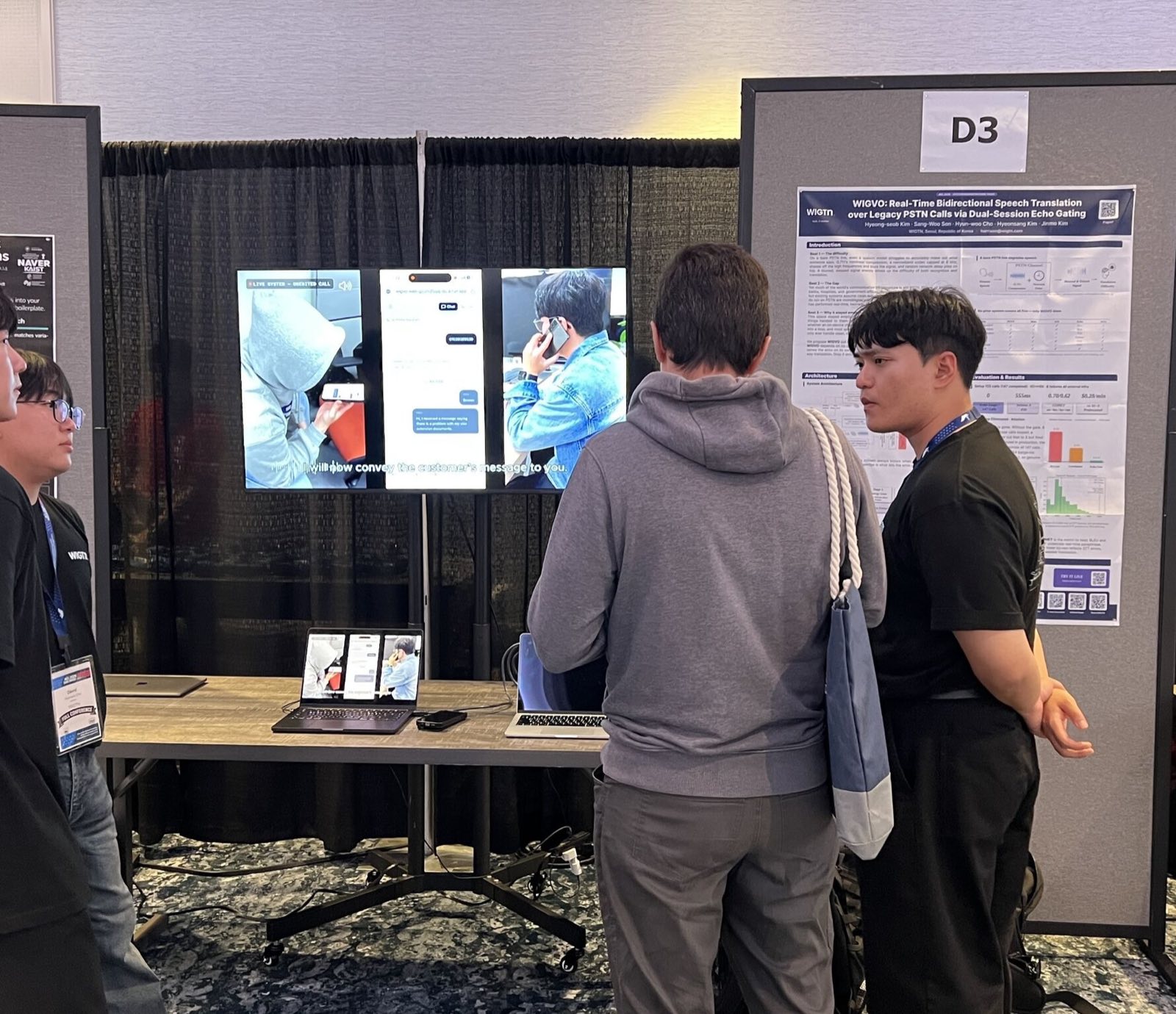
The three screens show one call from both ends at once.
Running it live in a loud exhibition hall was its own test, and a harsher one than the field study. The echo gate held. The dual-session design kept each direction's interpreter from bleeding into the other. And the latency stayed low enough that people stopped treating it like a walkie-talkie and just talked.
Between sessions
The coffee breaks are not a break. Twice a day the hall fills, everyone queues for the same buffet, and you end up talking to whoever is next to you in line. At ACL that means the person holding the plate beside you might be the author of a paper you cited last month. More of this trip's useful conversations started in that queue than in any scheduled session.
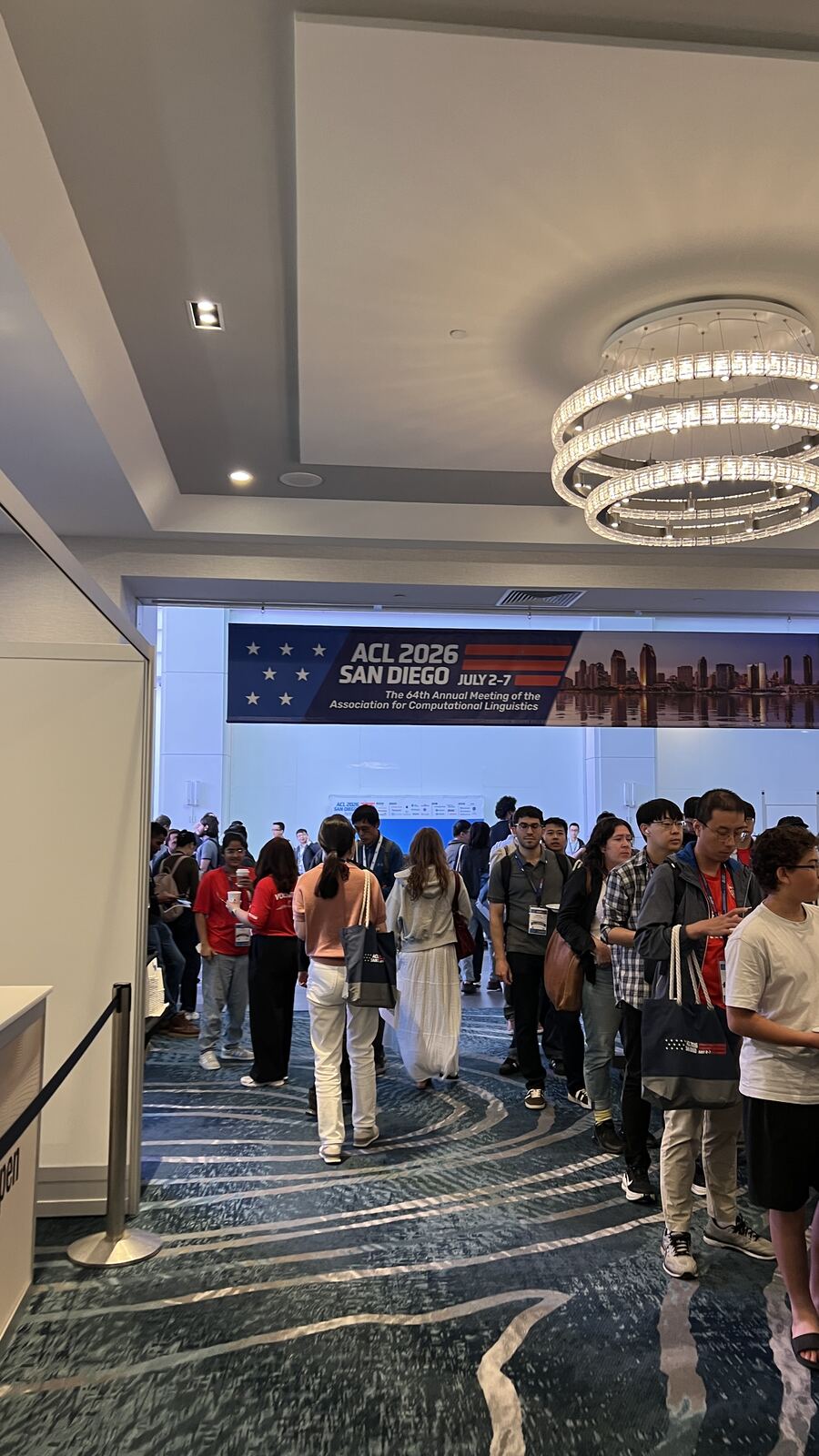
The corridor between rooms, every hour, on the hour.
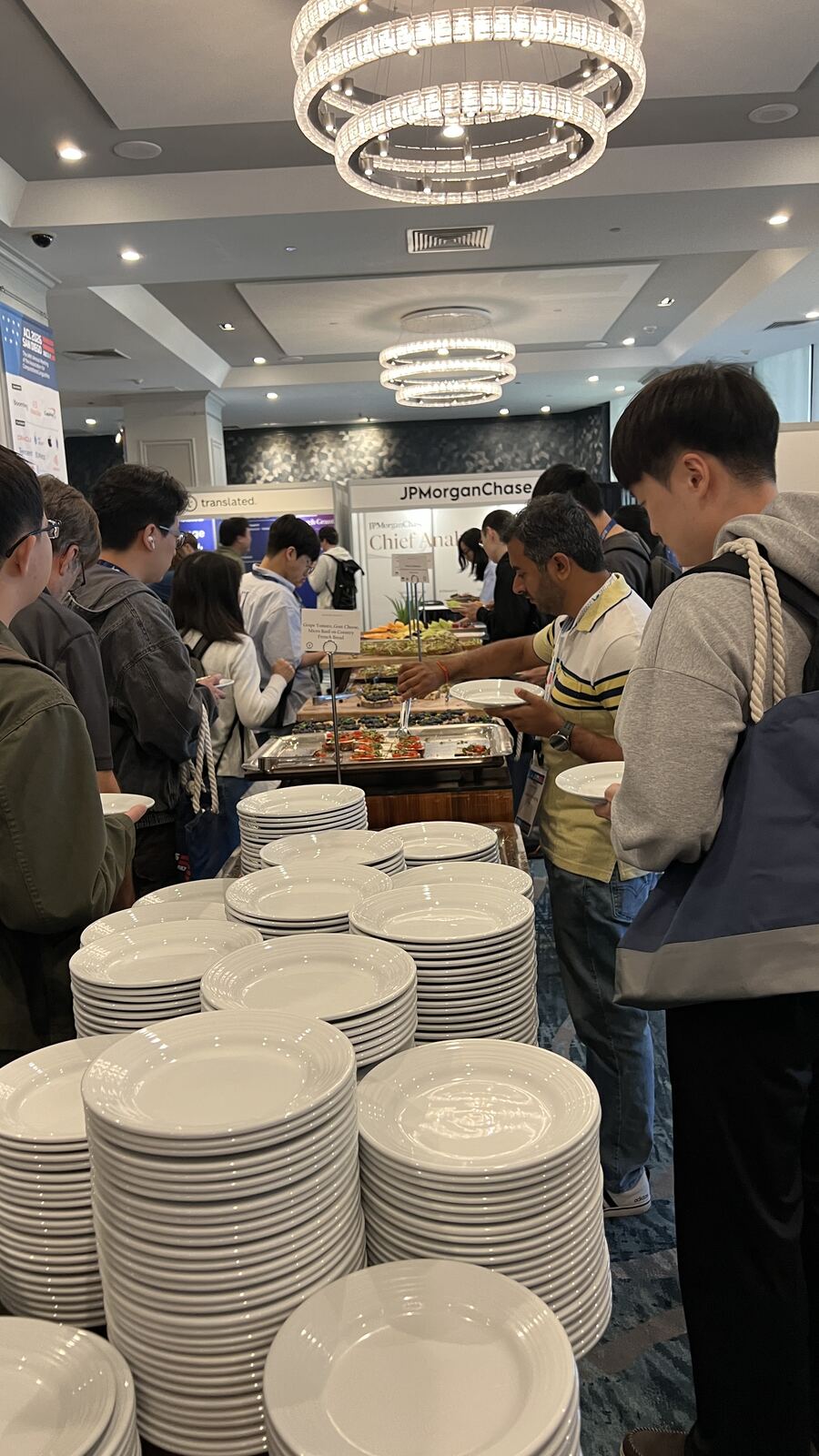
The queue where half the week's conversations actually started.
The questions we did not expect
We prepared for the academic questions and we got them: the evaluation protocol, why COMET against LLM references rather than human translations, how the voice-activity thresholds were tuned. Fair questions, and the paper answers them.
What we did not expect was how many people arrived from the other direction. Engineers from NVIDIA, Apple and Amazon came by and asked about the PSTN path, the per-minute cost at scale, whether it drops into an existing call center, and which language pairs are production-ready today. The NVIDIA speech group came back more than once, across both IWSLT and ACL, which by the third visit had turned into a proper conversation rather than a demo.
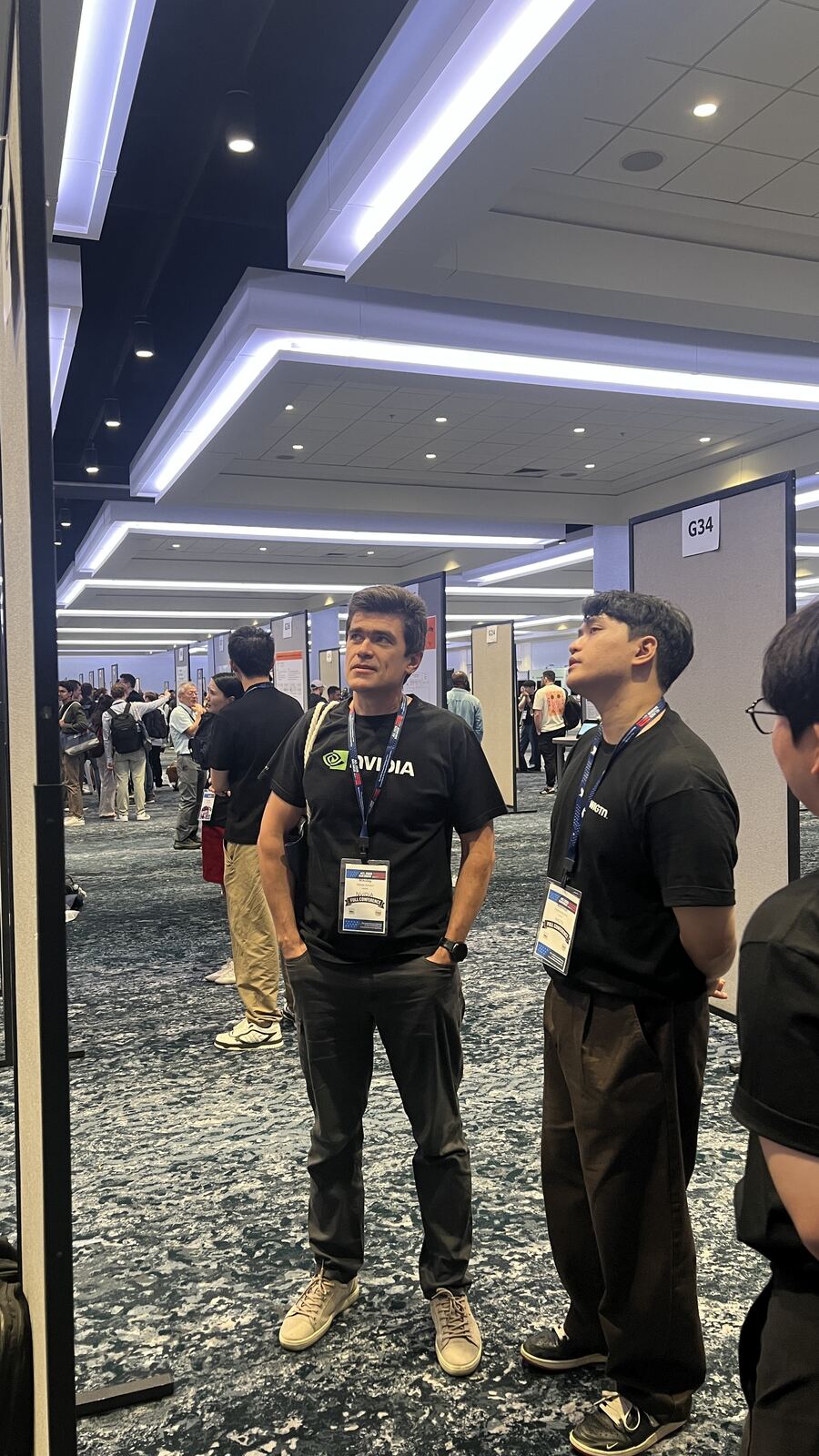
NVIDIA, on the third visit of the week.
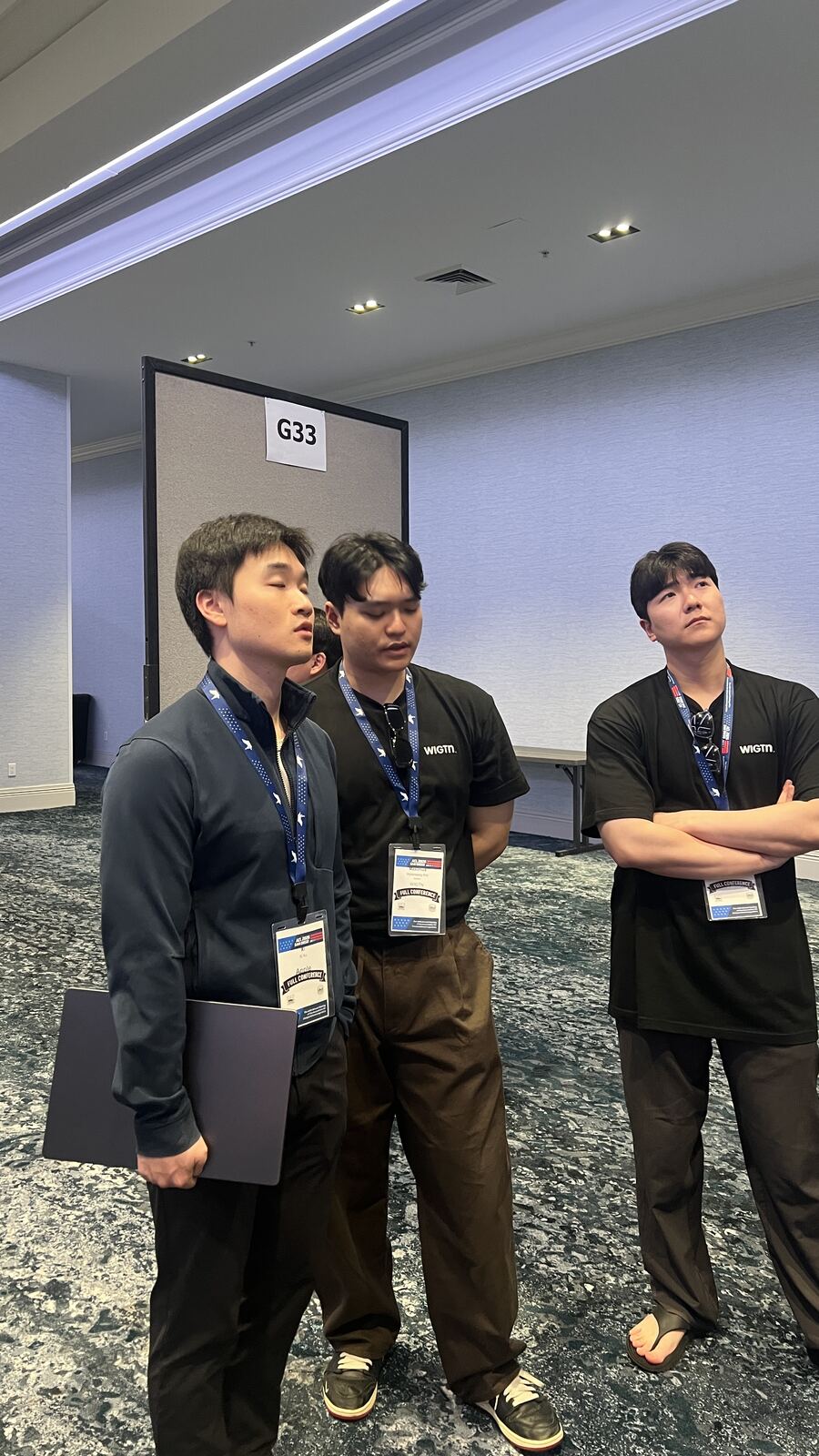
Apple, at the poster boards.
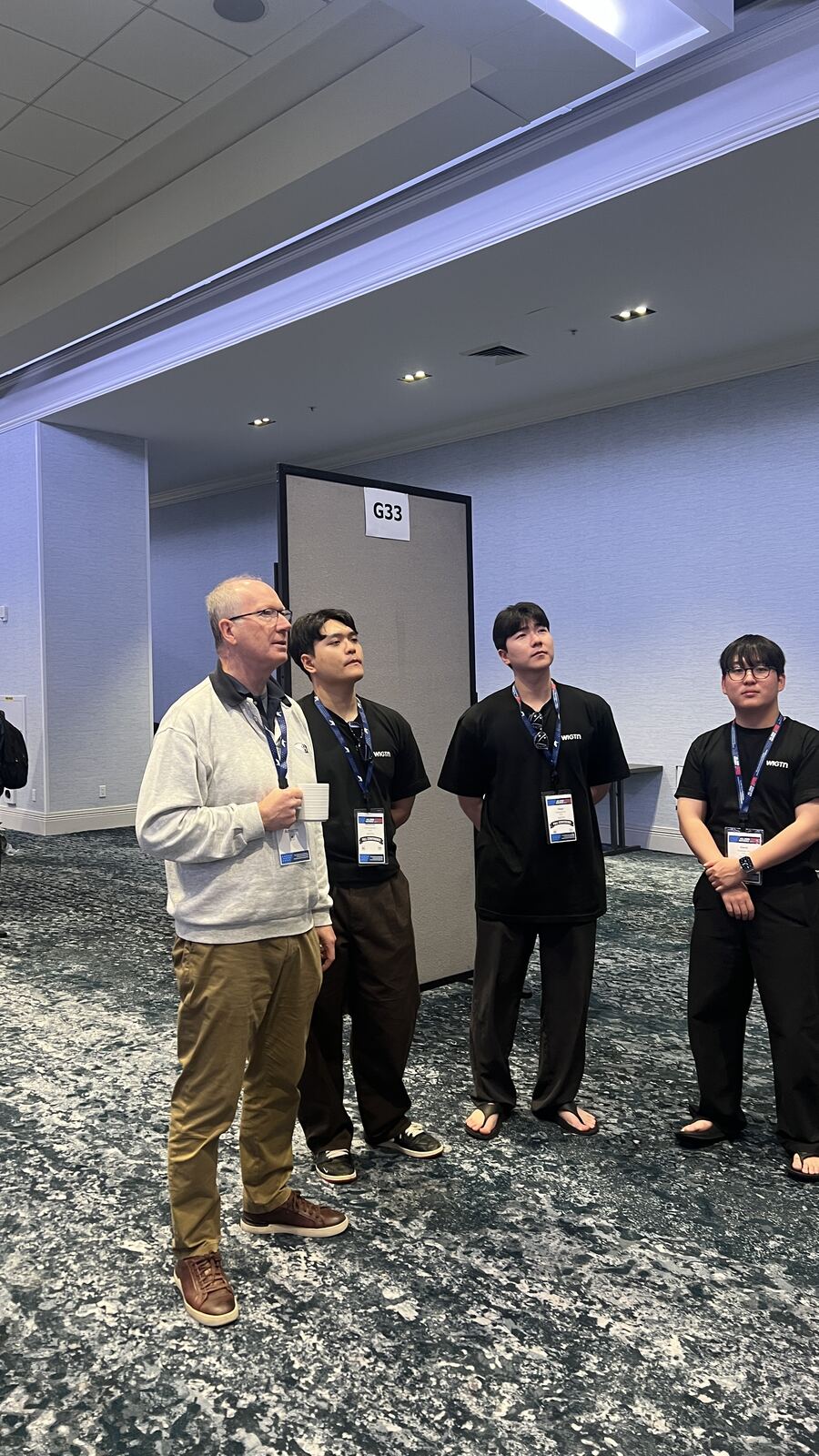
Marcello Federico (Amazon), IWSLT 2026 conference chair.
None of those are paper questions. They are deployment questions, and being asked them by people who build this for a living was, frankly, the best part of the week.
That was when it clicked: this is not just a paper. It is a product people are already waiting for.
IWSLT 2026: the oral and the poster
IWSLT, the 23rd International Conference on Spoken Language Translation, organised by ACL/ISCA SIGSLT, ran as a two-day workshop inside ACL. We were there twice over: an invited oral talk and a poster.
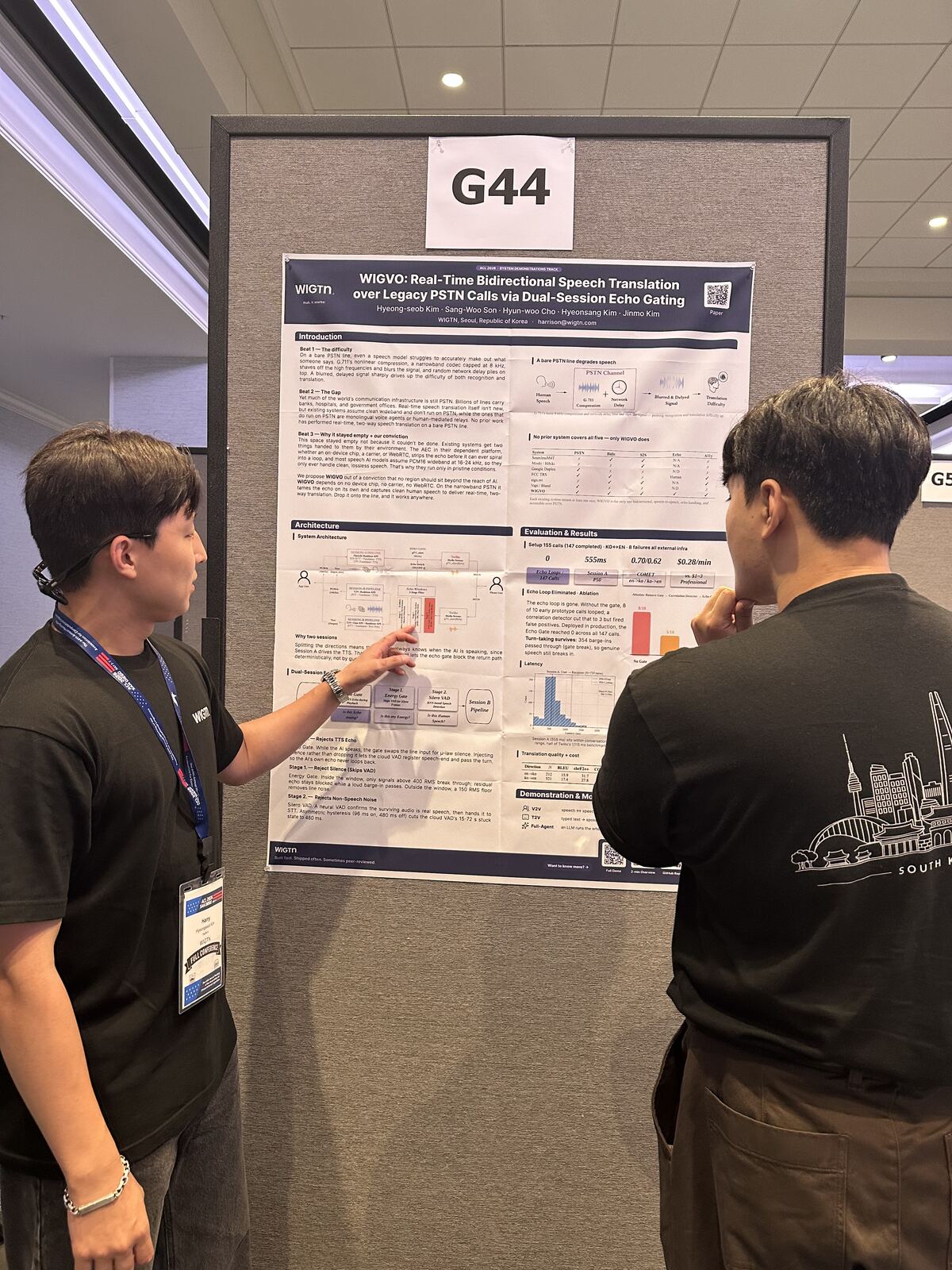
Board G44, half an hour before the session.
The invited oral let us walk the architecture end to end, including the part papers usually leave out: the idea that failed. We first tried a Pearson-correlation detector comparing outgoing synthesized audio against incoming line audio. It was the cleaner idea and it did not survive the phone network, because codec quantization and variable delay destroyed the stable signal relationship it needed. It cut looping from eight calls in ten to three, then introduced false positives. We threw it away.
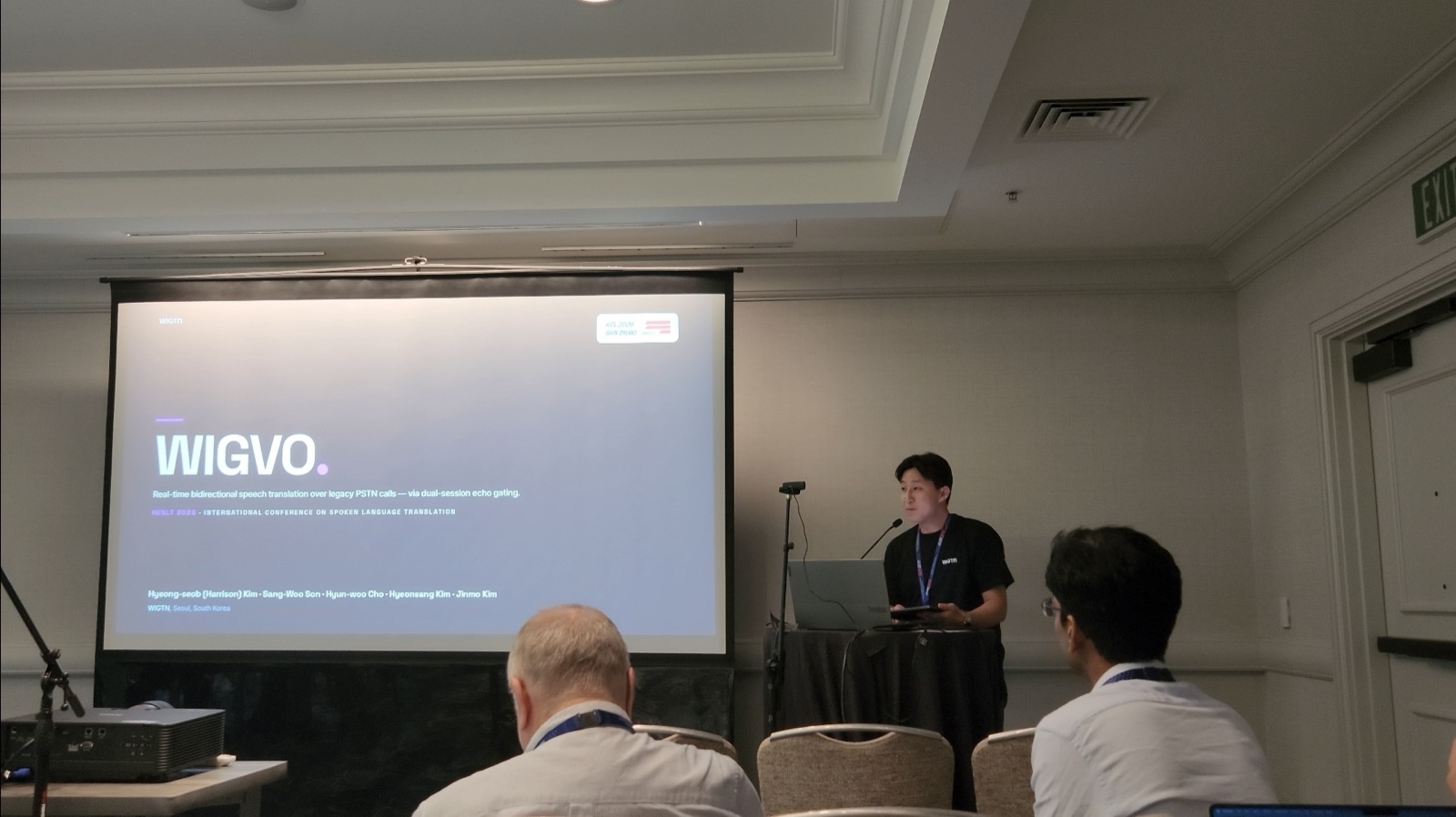
IWSLT 2026, invited oral.
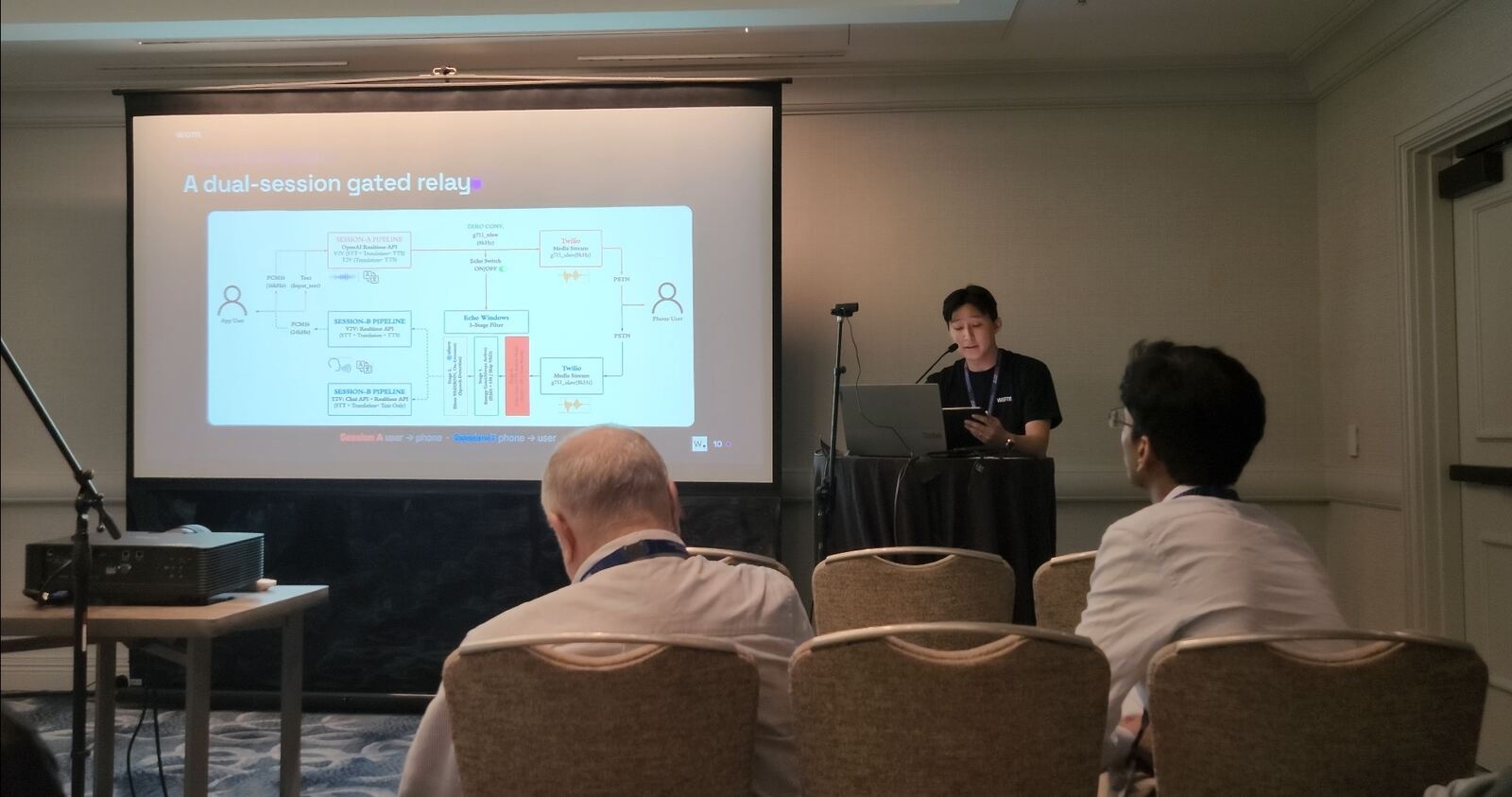
The slide the questions were really about: two sessions, one gate between them.
The poster afterwards turned into a two-hour conversation with exactly the people who care most about real-time speech translation. Several had hit the same echo problem from different directions, which is the kind of exchange you cannot get from a paper alone.
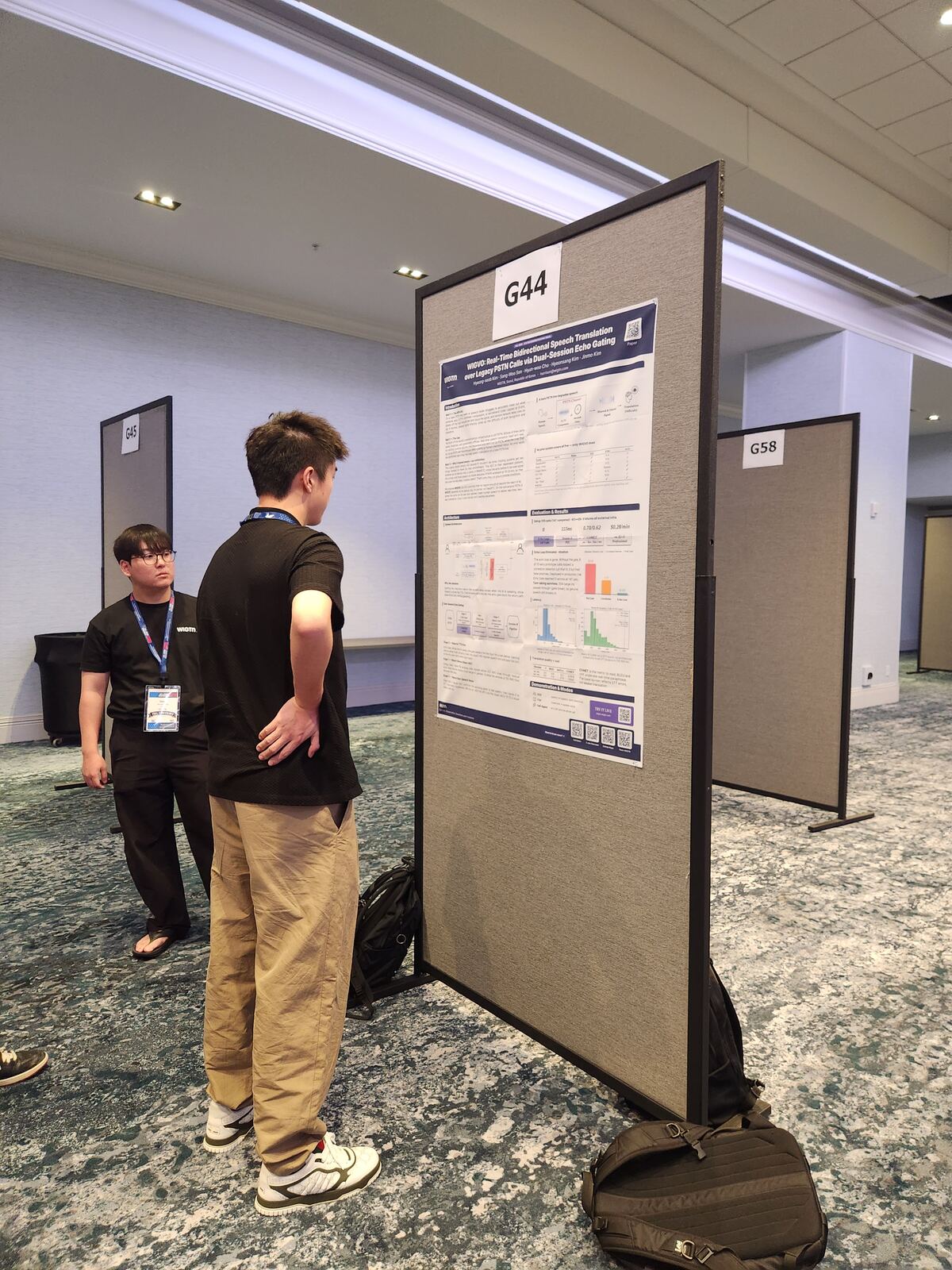
Two hours at G44, and we barely moved.
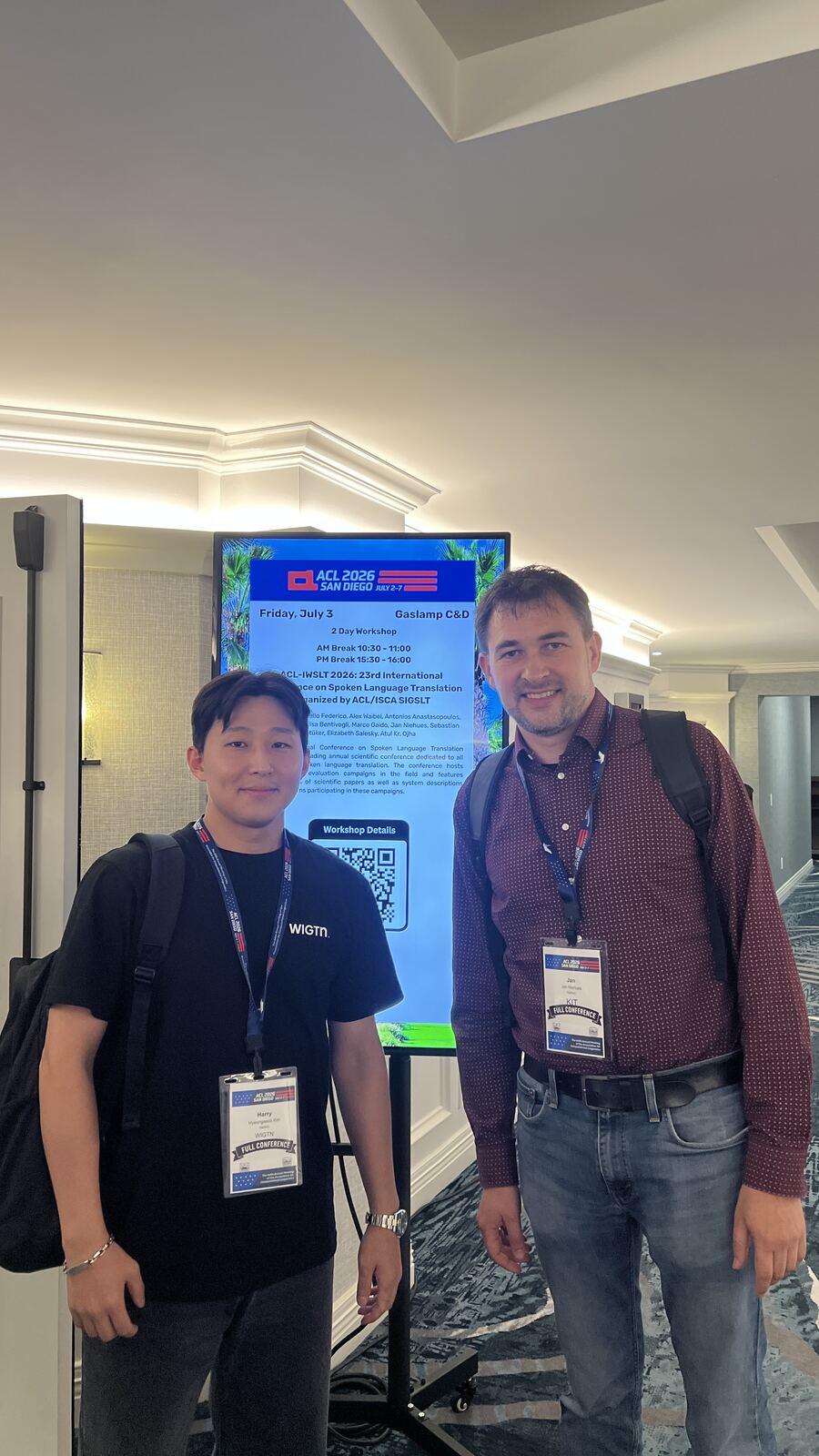
With Jan Niehues (KIT), IWSLT 2026 organizing committee, after the session.
A reception on an aircraft carrier
The social event was held on the USS Midway, the retired carrier moored on the San Diego waterfront, which the conference took over for the evening. You queue up the gangway, come out on a flight deck the length of three football pitches, and find the bar set up between the parked aircraft.
It is a strange and very effective way to run a networking event. Nobody can hide at a table, the sun goes down over the harbour behind the island, and you spend three hours talking to people you would never have been introduced to in a session room.
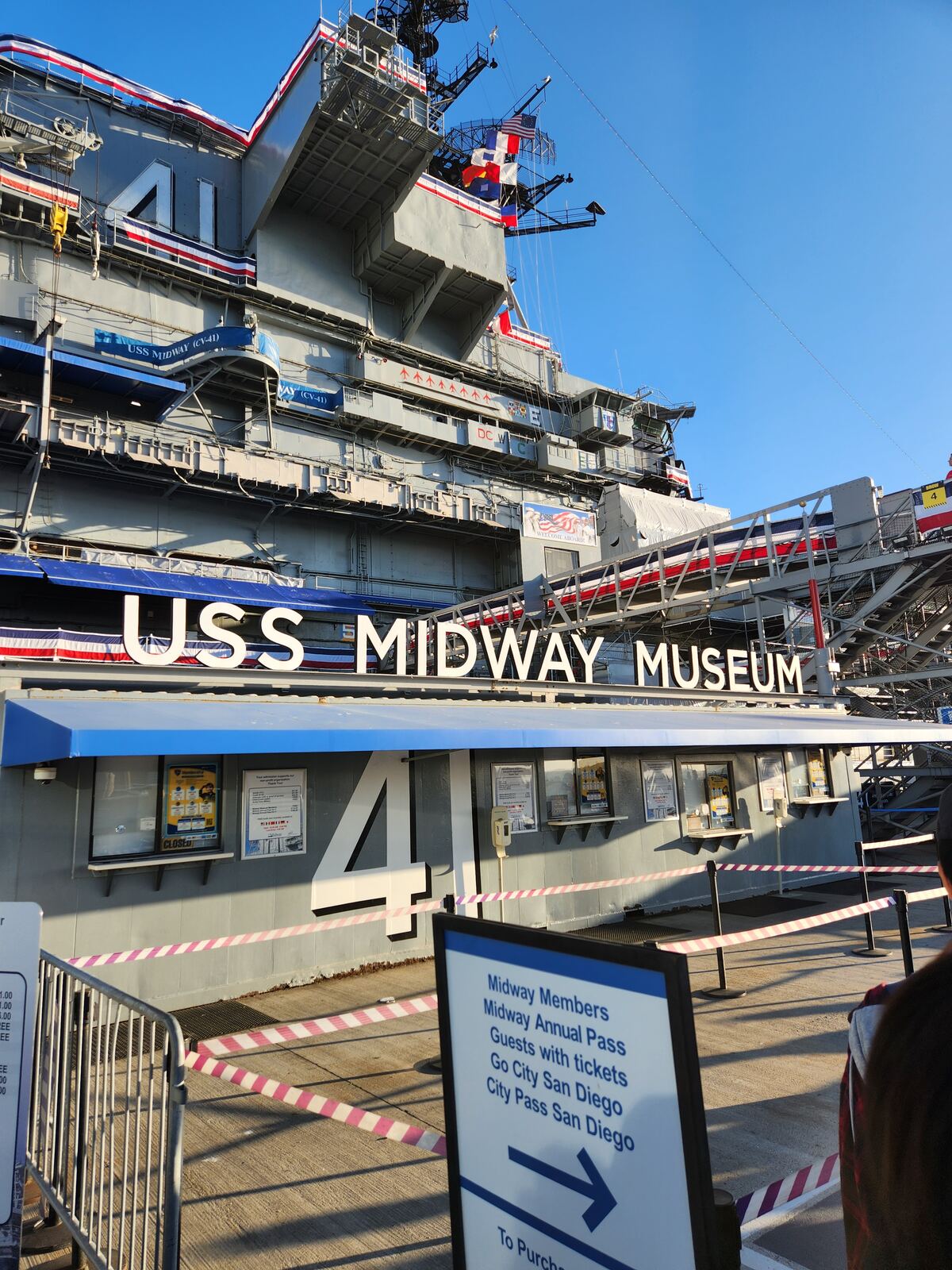
Up the gangway.
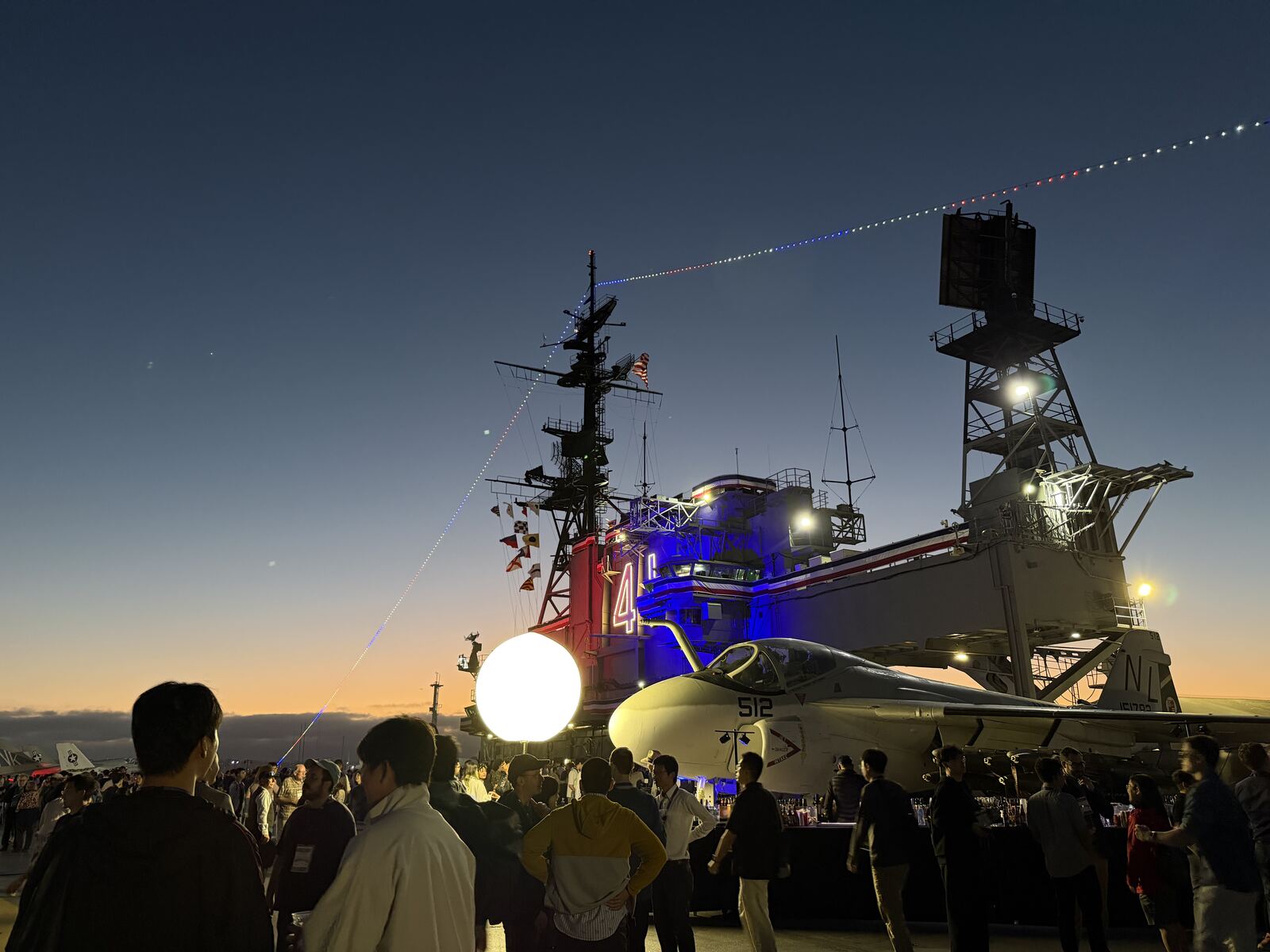
The flight deck at sunset, with the bar parked next to an A-6.
What changes because of this
We came back with a shorter list than we expected, but a sharper one.
- Session B is the bottleneck, and we now know exactly how much. Speech recognition accounts for 97.1% of the mean latency on the phone-originating path, where the median is 2,684ms against 555ms in the other direction. Optimization work goes there, not into the translation model.
- The P95 on that path is not acceptable for every conversation yet. We would rather say so than average it away.
- Language coverage is now demand-driven. We are prioritizing the pairs people actually asked for at the booth over the ones that were convenient to evaluate.
- Call-center integration came up often enough to stop treating it as a someday item.
- The evaluation needs human judgments. COMET against offline LLM references got us through review; it will not answer the question a hospital would ask.
The other thing we are taking home is harder to put in a list. WIGVO stops being finished when the paper is published. It is finished when someone calls a hospital in a language they do not share, and it simply works.
Thanks to
Antonios Anastasopoulos (George Mason University), IWSLT 2026 program chair, who extended the invitation that became the oral talk. There is an IWSLT half to this story only because of it.
Jan Niehues (KIT) and Marcello Federico (Amazon), on the IWSLT 2026 organizing committee and in the chair respectively, for the time and the questions.
To the engineers who came back a second and third time rather than nodding politely and moving on: you know who you are, and you made the week.
And everyone who picked up the phone at booth D3 and tried to break it. The list above is mostly your doing.
San Diego, you were great. Now back to shipping.
Working on something like this? Let's talk.
Talk to us